


Cleaning your CPAP equipment regularly is essential for your health and for keeping your device working properly. Moisture, skin oils, and dust can allow bacteria and mold to grow, which may lead to respiratory infections, skin irritation, unpleasant odors, and air leaks.
The good news is that proper CPAP cleaning takes as little as 5 minutes a day and can significantly extend the life of your equipment.
What You’ll Need to Clean Your CPAP
You don’t need special products to clean your CPAP equipment. Keep it simple:
- A sink or basin
- Warm, drinking-quality water (around 30°C / 86°F)
- Mild liquid soap (such as baby shampoo or a gentle, unscented hand soap)
- A clean towel
Avoid antibacterial soaps, bleach, alcohol, scented or citrus soaps, and harsh cleaning agents.
How to Clean Your CPAP Mask
Daily: Mask Cushion or Nasal Pillows
The mask cushion or nasal pillows sit directly against your skin and should be cleaned every day.
- Unplug your CPAP machine from the power source.
- Remove the mask cushion or nasal pillows from the mask.
- Wash gently in warm water using mild soap to remove facial oils.
- Rinse thoroughly with clean water.
- Place on a towel and allow to air dry out of direct sunlight.
Skin oils can create a greasy film that reduces the mask seal, causing air leaks and reducing therapy effectiveness.
Weekly: Mask Frame and Headgear
Once a week, clean the rest of the mask components.
- Disassemble the mask into its parts.
- Hand wash the frame and headgear in warm, soapy water.
- Soak for 30–60 minutes.
- Rinse well and allow to air dry away from direct sunlight.
Do not use washing machines or dryers, as heat can damage the materials.
How to Clean CPAP Tubing (Hose)
Weekly Cleaning
- Disconnect the tubing from both the mask and CPAP machine.
- Wash the inside and outside of the tubing with warm water and mild soap.
- Soak for 30–60 minutes.
- Rinse thoroughly to remove all soap residue.
- Hang over a shower rail or towel rack and allow to air dry completely.
Never use strong detergents or place tubing in a dryer.
How to Clean the Humidifier Water Chamber
Daily Cleaning
- Empty any remaining water every morning.
- Wipe the chamber with a clean disposable cloth.
- Allow it to air dry out of direct sunlight.
Using distilled water is recommended to prevent mineral buildup from tap water.
Weekly Cleaning
- Remove the humidifier chamber once the heater is off and cool.
- Wash with warm water and mild soap.
- Soak for 30–60 minutes.
- Rinse thoroughly and allow to air dry.
The chamber should always be clean, clear, and free of discoloration.
CPAP Cleaning Schedule (Quick Reference)
| CPAP Component | How Often | Cleaning Instructions | |
|---|---|---|---|
 | Mask cushion / nasal pillows | Daily | Wash with warm, soapy water; rinse and air dry |
 | Mask frame & headgear | Weekly | Hand wash, soak 30–60 minutes, rinse and air dry |
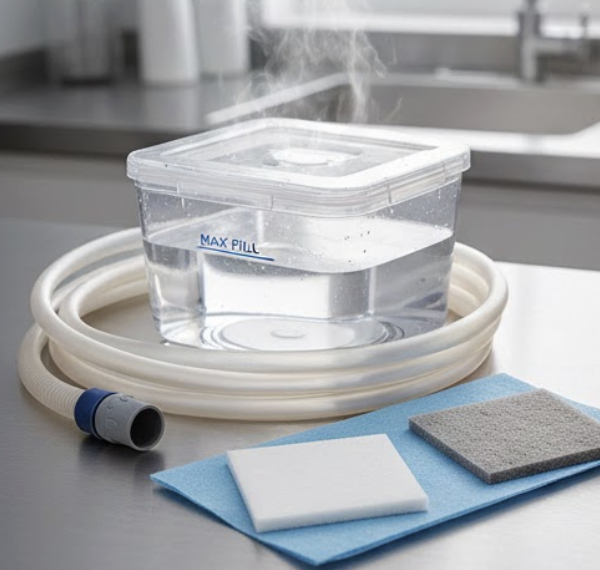 | Air tubing | Weekly | Wash, soak, rinse, hang to dry |
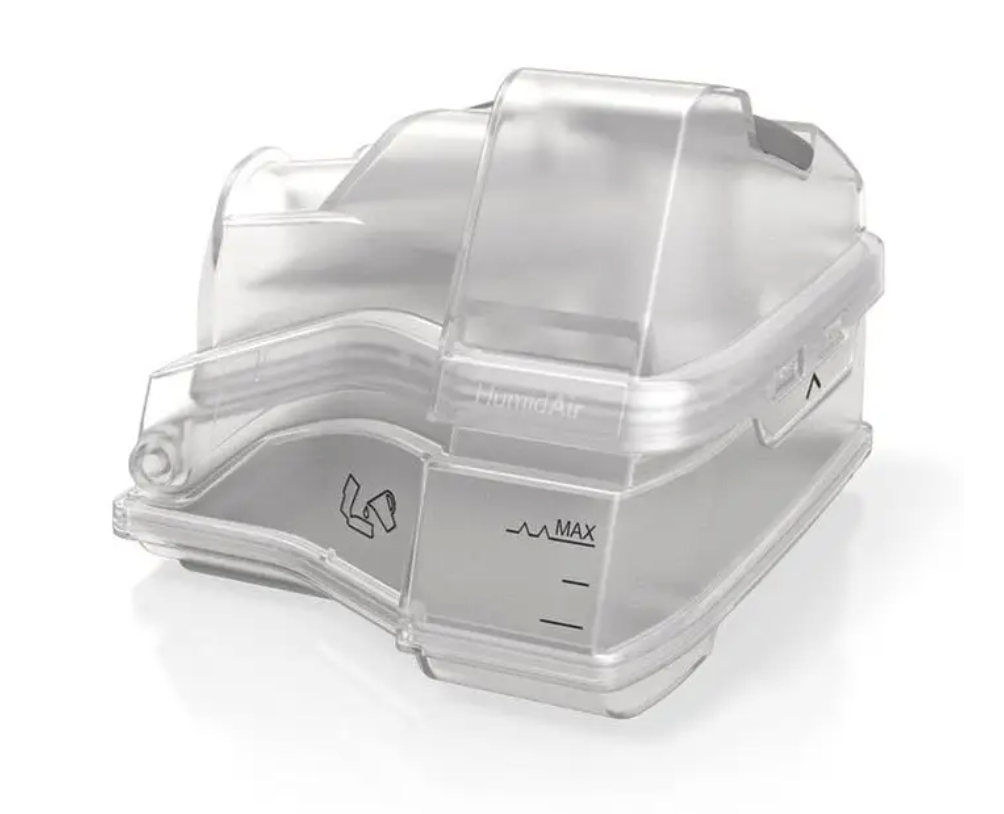 | Humidifier water chamber | Daily & Weekly | Empty daily; wash and soak weekly |
| Reusable foam filter (grey) | Weekly | Wash, rinse thoroughly, air dry completely | |
| Disposable filter (white) | Replace as needed | Do not wash; replace after ±30 days or when dirty | |
 | CPAP machine exterior | As needed | Wipe with a damp cloth only |
What Is the Best Thing to Clean a CPAP Machine With?
The safest and most effective option is warm water and a mild, unscented liquid soap. This removes oils and bacteria without damaging your equipment or leaving harmful residue that could be inhaled during therapy.
How Often Do I Really Need to Clean My CPAP?
At a minimum:
- Daily: Mask cushion and humidifier water chamber
- Weekly: Mask frame, headgear, tubing, and filters
Skipping regular cleaning can lead to infections, bad odors, skin irritation, and reduced CPAP effectiveness.
What Should I Avoid When Cleaning My CPAP?
Do not use:
- Bleach or alcohol
- Antibacterial soaps
- Essential oils or scented cleaners
- Dishwashers, washing machines, or dryers
- Ozone or UV cleaning devices (these may damage CPAP components and void warranties)
These products can damage materials, cause cracks, or leave residues that are unsafe to inhale.
Do I Need to Empty CPAP Water Every Day?
Yes. Any remaining water in the humidifier chamber should be emptied daily. Stagnant water encourages bacterial growth. Always refill with fresh distilled water before use.
What Are the Signs of a Dirty CPAP?
Common signs include:
- Unpleasant or musty smells
- Visible residue or discoloration
- Increased mask leaks
- Skin irritation or breakouts
- Worsening nasal or respiratory symptoms
If you notice any of these, your CPAP equipment likely needs cleaning or replacement.
Regular CPAP cleaning improves comfort, hygiene, and therapy effectiveness while extending the life of your equipment. A few minutes of daily care can make a big difference in your sleep quality and overall health.
