

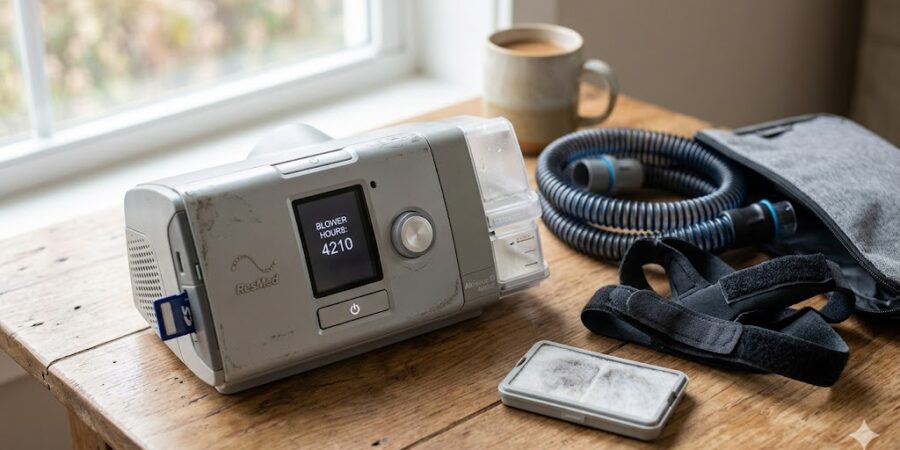
Buying a used CPAP (Continuous Positive Airway Pressure) machine can save you a significant amount of money, sometimes hundreds. But unlike a second-hand phone or toaster, a CPAP is a medical device that directly affects your breathing and overall health. That means you need to be extra careful when choosing one. Before you make a purchase, here’s what you should know to stay safe and get a machine that actually works for you.
Even in the first paragraph, it’s important to answer a reader’s main question: yes, you can buy a used CPAP safely, but only if you check the machine thoroughly, understand the risks, and follow proper hygiene and prescription guidelines.
Why Buying a Used CPAP Can Be Tricky
CPAP machines are regulated medical devices in South Africa, and even when buying locally, safety is crucial. A poorly maintained or contaminated machine can expose you to mold, bacteria, or lingering odors. Additionally, a machine set to someone else’s pressure settings may not treat your sleep apnea effectively and could even be harmful.
That said, there are ways to minimize risk and get a reliable device.
Key Considerations Before Buying
| Factor | What to Check | Notes |
| Run Hours | Total usage (blower hours) | Ideally under 5,000 hours; most machines last 20,000 hours (~5–7 years nightly use) |
| Model & Recalls | Age, brand, recall status | Avoid recalled units (e.g., older Philips Respironics with degraded foam) |
| Hygiene & Maintenance | Cleanliness of internal components, filters, humidifier | Smells, residue, or mold are red flags |
| Compatibility | Mask types, tubing, accessories | Must match your prescription and therapy style |
| Settings Adjustment | Prescription pressure, ramp, humidification | Ensure it can be reset for your use |
| Warranty | Reseller or refurbished warranty | Most used machines have none; factor in potential replacement costs |
Source Matters: Refurbished vs. Individual Sellers
Refurbished Retailers: These are the gold standard. Certified companies professionally clean, sanitize, replace filters, and often provide a 6–12 month warranty. Alternatively, you can make use of Meditree’s middleman service, which handles all the safety and quality checks for you.
Individual Sellers: High risk. You can’t be certain about previous use, storage, or exposure to smoke, mold, or infections. Facebook Marketplace or classified platforms sales should be approached cautiously.
Run Hours: The CPAP “Odometer”
Every CPAP machine has a usage counter, sometimes called blower hours. This is the most objective way to gauge how much life the machine has left.
- Ideal: <5,000 hours
- Warning: 5,000–10,000 hours is moderate wear
- High: >10,000 hours, likely nearing end-of-life
If the seller can’t show you the run hours, it’s safer to walk away.
Hygiene and Smell Test
Internal contamination is a real concern:
- Odors: Tobacco, mold, or strong perfumes often mean the internal foam or tubing is contaminated.
- Visual check: Use a flashlight to inspect vents for dust, mold, or insect casings.
- Accessories: Always replace masks, headgear, tubing, and filters with new ones. Never reuse a prior owner’s personal components.
Pressure Accuracy and Data Tracking
CPAP therapy depends on correct pressure settings. A machine set to someone else’s prescription can be ineffective, or even harmful.
- Data Capable Machines: Models like ResMed AirSense 10/11 allow your doctor to track therapy via an SD card.
- Check settings: Ensure ramp, humidification, and pressure can be reset to match your prescription.
Quick Checklist Before Buying a Used CPAP
☐ Machine age under 5 years
☐ Blower hours under 5,000
☐ Model not on manufacturer recall list
☐ Humidifier chamber included and clean
☐ Power cord and hose included
☐ SD card/data tracking supported
☐ Personal parts (mask, headgear, tubing, filters) replaced or planned to be replaced
☐ Price reasonable for condition
☐ Verified with your doctor that model and therapy type match your prescription
Accessories You’ll Need to Replace
| Accessory | Notes |
| Mask | Ideally always new, as it affects the seal and comfort. Used masks must be professionally cleaned and disinfected |
| Headgear | Ideally always new, as it affects the mask’s seal and your comfort. Used headgear must be professionally cleaned before use |
| Tubing | Replace if previous use unknown |
| Filters | Replace immediately; check for dust or mold |
| Water Chamber | Check for cracks or residue; replace if damaged |
Is It Safe to Buy a Second-Hand CPAP Machine?
Buying a used CPAP can be cost-effective if purchased from a certified reseller. Buying from informal sellers carries health risks, including contaminated internal components, mold, or inaccurate pressure settings. Even with a used machine, a valid prescription is essential, and you should follow the same safety steps as if buying new.
For a deeper guide on safety, see: Is it safe to buy a second-hand CPAP machine?
Final Thoughts
A used CPAP machine is not a guaranteed bargain, it’s a balance between cost savings and safety. By checking run hours, model history, hygiene, data capabilities, and accessories, you can minimize risk and make a smart purchase. Always consult your doctor to confirm that the device meets your prescription needs.
Remember: your CPAP isn’t just a gadget, it’s your breathing companion at night. Treat it carefully.
