

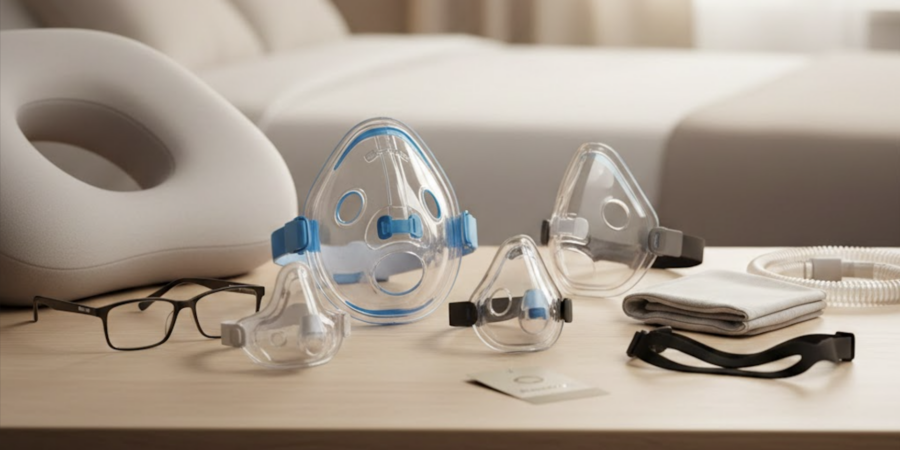
If you or a loved one uses a CPAP machine, you know the mask isn’t just an accessory – it’s the heart of your therapy. The right mask ensures pressurized air reaches your airway effectively, helping you sleep better and wake up refreshed. Choosing the wrong mask can lead to discomfort, leaks, or even skipped therapy, reducing the benefits of CPAP treatment.
With so many mask types, sizes, and brands available, it can feel overwhelming. This guide will help you understand the different CPAP masks, how to choose one based on your sleep habits and breathing style, and highlight popular options from ResMed.
Key Takeaways
- CPAP masks come in several types: full-face, nasal, nasal pillows, and less common options like hybrid, oral, or total-face masks.
- Your sleep position, breathing style, facial features, and pressure needs all influence which mask works best.
- Comfort is essential – an uncomfortable mask can reduce therapy compliance.
- Accessories like mask liners, chin straps, and CPAP pillows can help prevent leaks, irritation, and discomfort.
- ResMed offers a range of masks designed for comfort, seal stability, and innovative features, including “For Her” options for smaller facial contours.
Why Are There Different CPAP Mask Types?
CPAP masks aren’t one-size-fits-all because people sleep differently, breathe differently, and have unique facial structures.
For instance:
- A side sleeper who breathes through their nose has different needs than a back sleeper who breathes through their mouth.
- Facial hair can make sealing difficult for certain masks.
- Some sleepers are prone to claustrophobia and prefer masks with minimal facial contact.
Different designs exist to balance airflow efficiency, comfort, seal stability, and movement freedom, so that therapy works effectively for each individual.
Parts of a CPAP Mask
Understanding the key components of a CPAP mask helps you troubleshoot problems like leaks or pressure points:
- Headgear: Straps that hold the mask securely. Velcro or magnetic clips make adjustments easy.
- Mask Frame: The structural backbone connecting the cushion and headgear.
- Mask Cushion: Soft silicone, gel, or foam that creates a seal around your nose and/or mouth.
- Mask Hose: Flexible tubing that delivers pressurized air from the CPAP machine to the cushion.
Each component matters – a worn cushion or improperly adjusted strap can compromise therapy effectiveness.
CPAP Mask Types Explained
1. Full-Face CPAP Masks
Full-face masks cover both the nose and mouth, delivering air even if you breathe through your mouth.
Best for: Mouth breathers, people with high-pressure therapy needs, or chronic nasal congestion.
Why it works: The large seal area handles higher pressure without leaking and ensures therapy continues even if your mouth opens during sleep.
Consider:
- Bulkier design may feel restrictive.
- Can interfere with glasses or reading in bed.
- Facial hair may prevent a perfect seal.
2. Nasal CPAP Masks
Nasal masks cover the nose only, creating a seal around the nostrils.
Best for: Side and back sleepers who breathe through their nose.
Why it works: Less bulk than full-face masks allows more freedom to move during sleep, while still delivering effective airflow.
Consider:
- Not ideal for mouth breathers without a chin strap.
- Stomach sleepers may find it shifts or leaks under pillow pressure.
3. Nasal Pillow CPAP Masks
These minimalistic masks sit under the nostrils, delivering air directly into the nose through soft cushions.
Best for: Active sleepers, glasses wearers, and those prone to claustrophobia.
Why it works: The small design reduces contact with the face, making it easier to read, watch TV, or move during sleep.
Consider:
- Not ideal for very high-pressure therapy.
- People with sinus issues or chronic congestion may not get a perfect seal.
Other Mask Options
| Mask Type | Coverage | Best For | Notes |
|---|---|---|---|
| Hybrid | Nose + mouth | Alternating nose/mouth breathers | Smaller than full-face, but not ideal for facial hair |
| Oral | Mouth only | Chronic nasal blockage | No forehead headgear, less bulky than full-face |
| Total-Face | Entire face | Severe leak issues | Rarely prescribed; distributes pressure across whole face |
ResMed CPAP Masks: Popular Options
ResMed is known for comfortable, high-quality masks designed for various needs. Many models come in multiple sizes and “For Her” versions for smaller facial features.
Popular ResMed masks:
1. AirFit F20 Full-Face Mask
- Nose + mouth coverage, ideal for mouth breathers and high-pressure therapy.
- Flexible frame for stability and comfort.
2. AirFit N30i Nasal Mask
- Sits under the nose, with a rotating tube for freedom of movement.
- Great for side or back sleepers.
3. AirFit P10 Nasal Pillow Mask
- Minimal design, two soft pillows fit in the nostrils.
- Lightweight and quiet, perfect for active sleepers or glasses wearers.
Tips for ResMed Users:
- Try multiple cushion sizes to get the perfect seal.
- The “For Her” line suits smaller facial contours.
- Ensure compatibility with your CPAP machine.
| ResMed Mask | Mask Type | Coverage | Cushion Type | Best For | Key Features | Comfort Notes |
|---|---|---|---|---|---|---|
| AirFit F20 | Full-Face | Nose + Mouth | Silicone | Mouth breathers, high-pressure users | Flexible frame, secure seal, quiet | Good stability; slightly larger/bulkier |
| AirFit N30i | Nasal | Under Nose | Silicone | Side/back sleepers, nose breathers | Rotating tube, minimal facial contact | Lightweight; allows freedom of movement |
| AirFit P10 | Nasal Pillow | Nostrils | Silicone | Active sleepers, glasses wearers, claustrophobic users | Ultra-quiet, minimal contact | Very lightweight; small profile ideal for movement |
| AirFit F30 | Full-Face | Nose + Mouth | Silicone | Mouth breathers, moderate/high-pressure | Compact design, cushion easy to adjust | Smaller than F20; easier for reading/watching TV |
| AirFit N20 | Nasal | Nose | Silicone | Nose breathers, moderate pressure | Comfortable seal, quiet operation | Slightly larger than N30i; stable fit |
| AirFit P30i | Nasal Pillow | Nostrils | Silicone | Active sleepers, claustrophobic | Tube runs over head, frees pillow space | Minimal contact; very lightweight |
| AirFit F30i | Full-Face | Nose + Mouth | Silicone | Mouth breathers, side sleepers | Rotating tube, compact frame | Lightweight, less bulky than F20; good for movement |
Tips for using the table:
- The Best For column helps match masks to your sleeping style and breathing habits.
- Key Features highlight comfort and usability innovations.
- Comfort Notes give quick insights into daily use.
How to Choose a CPAP Mask
Your mask choice should consider sleep position, breathing style, facial features, and pressure needs.
Choosing Based on Sleep Position
| Sleep Position | Recommended Mask Type | Why It Works |
|---|---|---|
| Side sleeper | Nasal mask or nasal pillows | Low-profile design reduces shifting |
| Back sleeper | Any mask type | Pillow contact is minimal; comfort is key |
| Stomach sleeper | Nasal pillows | Low-profile prevents pressure points and leaks |
| Combination/Active sleeper | Nasal mask or pillows | Flexible, less bulky, reduces leaks |
Choosing Based on Breathing Style
| Breathing Style | Recommended Mask Type | Why It Works |
|---|---|---|
| Nose breathing | Nasal mask or nasal pillows | Lightweight, less intrusive, effective airflow |
| Mouth breathing | Full-face or hybrid | Ensures therapy continues even if mouth opens |
| Combination | Full-face or hybrid | Adapts to temporary congestion or alternating breathing |
Features to Look For in a CPAP Mask
- Comfortable cushion: Soft silicone, gel, or foam that doesn’t leave marks
- Adjustable headgear: Snug fit without pressure points
- Freedom of movement: Flexible tubing and low-profile masks for active sleepers
- Breathable materials: Prevent heat and sweat
- Quiet operation: Minimizes sleep disruption
Common Mask Issues and Quick Fixes
- Leaks: Adjust straps, reposition mask, or replace cushions
- Dry mouth: Switch to full-face mask or add a chin strap
- Skin irritation: Use mask liners or choose hypoallergenic materials
- Claustrophobia: Start with smaller masks or use ramp mode to ease pressure gradually
CPAP Mask Accessories
- Mask Liners: Soft fabric barriers for comfort and hygiene
- Chinstraps: Keep your mouth closed for nasal mask users
- CPAP Pillows: Specially shaped pillows prevent mask displacement for side and stomach sleepers
Final Tips for CPAP Users
- Trying a few masks or cushion sizes is normal – don’t settle for the first one.
- Comfort directly affects therapy adherence. A mask that fits well = consistent use = better health outcomes.
- Consult your healthcare provider or reach out to Meditree for guidance to find the best fit.
Explore CPAP Masks on Meditree
Ready to find the perfect mask? Browse our selection of CPAP masks, cushions, and accessories to start sleeping better tonight.
